Se-tenant: Confederation Bridge (Canada 1997)
Confederation Bridge (Canada 1997)
31 March (Canada ) within release Opening of Confederation Bridge, Northumberland Strait goes into circulation Se-tenant Confederation Bridge face value 2*45 Canadian cent
| Se-tenant Confederation Bridge in catalogues | |
|---|---|
| Stamp Number: | Sn: CA 1646i |
Se-tenant is horizontal format.
se-tenant pair Sn CA 1646 and Sn CA 1645 on right.Se-tenant Confederation Bridge it reflects the thematic directions:
Birds (Aves), a subgroup of Reptiles, are the last living examples of Dinosaurs. They are a group of endothermic vertebrates, characterised by feathers, toothless beaked jaws, the laying of hard-shelled eggs, a high metabolic rate, a four-chambered heart, and a strong yet lightweight skeleton. Birds live worldwide and range in size from the 5 cm (2 in) bee hummingbird to the 2.75 m (9 ft) ostrich. They rank as the class of tetrapods with the most living species, at approximately ten thousand, with more than half of these being passerines, sometimes known as perching birds. Birds are the closest living relatives of crocodilians.
A bridge is a structure built to span physical obstacles without closing the way underneath such as a body of water, valley, or road, for the purpose of providing passage over the obstacle. There are many different designs that each serve a particular purpose and apply to different situations. Designs of bridges vary depending on the function of the bridge, the nature of the terrain where the bridge is constructed and anchored, the material used to make it, and the funds available to build it.
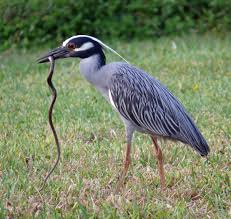
Herons are long-legged, long-necked, freshwater and coastal birds in the family Ardeidae, with 72 recognised species, some of which are referred to as egrets or bitterns rather than herons. Members of the genera Botaurus and Ixobrychus are referred to as bitterns, and, together with the zigzag heron, or zigzag bittern, in the monotypic genus Zebrilus, form a monophyletic group within the Ardeidae. Egrets do not form a biologically distinct group from herons, and tend to be named differently because they are mainly white or have decorative plumes in breeding plumage. Herons, by evolutionary adaptation, have long beaks.
A lighthouse is a tower, building, or other type of structure designed to emit light from a system of lamps and lenses, and to serve as a navigational aid for maritime pilots at sea or on inland waterways. Lighthouses mark dangerous coastlines, hazardous shoals, reefs, and safe entries to harbors, and can assist in aerial navigation. Once widely used, the number of operational lighthouses has declined due to the expense of maintenance and use of electronic navigational systems.